
Prepared By : Manish Gaikwad
Introduction
Aligning efforts with fundamental corporate goals is no longer discretionary in today’s quickly changing
business environment; it is necessary for innovation and sustainable growth. By consolidating project,
portfolio, and resource management into a single platform, ServiceNow’s Strategic Portfolio
Management (SPM) module aims to dismantle organizational silos and enable businesses to generate
quantifiable value.
What Sets ServiceNow SPM Apart?
The comprehensive approach of ServiceNow SPM, which unifies Idea Management, Demand
Management, Portfolio Planning, and sophisticated reporting under a single digital roof, sets it apart.
Executives and project teams are empowered by this unified perspective to:
- Capture Innovation: The Idea Management platform encourages teamwork and allows anybody to submit fresh concepts, which are subsequently assessed for viability and business impact.
- Align Demands with Strategy: Demand management makes sure that only the most worthwhile and well-aligned projects proceed by giving demands from all areas of the company top priority.
- Optimize Portfolio and Resource Planning: To help leaders make well-informed decisions and make real-time portfolio adjustments, SPM’s dashboards integrate financial data, capacity planning, and scenario analysis.
- Report with Confidence: Leaders can now get the actionable insights they require on project status, resource allocation, and strategic alignment thanks to automated, configurable reporting that does away with laborious data collection.
Core Pillars of ServiceNow SPM
- Idea Management: Leverage the organization’s combined creativity. SPM democratizes
innovation by gathering ideas from staff members at all levels and putting in place a methodical
procedure for assessing and developing concepts according to their possible business impact. - Demand management: Act as the gatekeeper by setting priorities and regulating the flow of
new projects. Demand management balances capacity and demand to maximize investment
and resource use, ensuring that requests and projects are in line with strategic objectives. - Portfolio and Resource Planning: Give executives flexible instruments for capacity planning,
risk management, and financial forecasting. Decision-makers can evaluate “what-if”
possibilities and dynamically modify portfolios as circumstances change by using scenario
modeling. - Reporting and Analytics: Use predictive analytics, dashboard customization, and automated
reporting to transition from reactive to proactive management. These characteristics improve
decision quality and organizational transparency by exposing hidden risks and opportunities. - AI-Driven Insights: Make use of AI to spot risks, balance workloads, and intelligently
prioritize tasks. Predictive analytics combined with Now Assist takes portfolio management
above and beyond conventional techniques.
Real-World Impact: Transforming Business Outcomes
A number of prominent figures in the industry have utilized ServiceNow SPM to generate measurable
benefits. For instance, a global retail company saw quantifiable increases in revenue and engagement
after using SPM to redirect funds towards customer-centric digital projects. In a different instance, a
top financial services company used SPM to improve resource visibility and teamwork, which sped up
project completion and improved governance.
Expanding Beyond Core Functions: Integration and Innovation
ServiceNow SPM is not a stand-alone system. It offers an end-to-end operational environment through
its smooth interface with other ServiceNow modules, including Hardware Asset Management (HAM),
Application Portfolio Management (APM), and IT Service Management (ITSM). Additionally, by
transforming complex data into actionable foresight, SPM’s utilization of cutting-edge technologies like
generative AI guarantees that enterprises stay ahead of the curve.
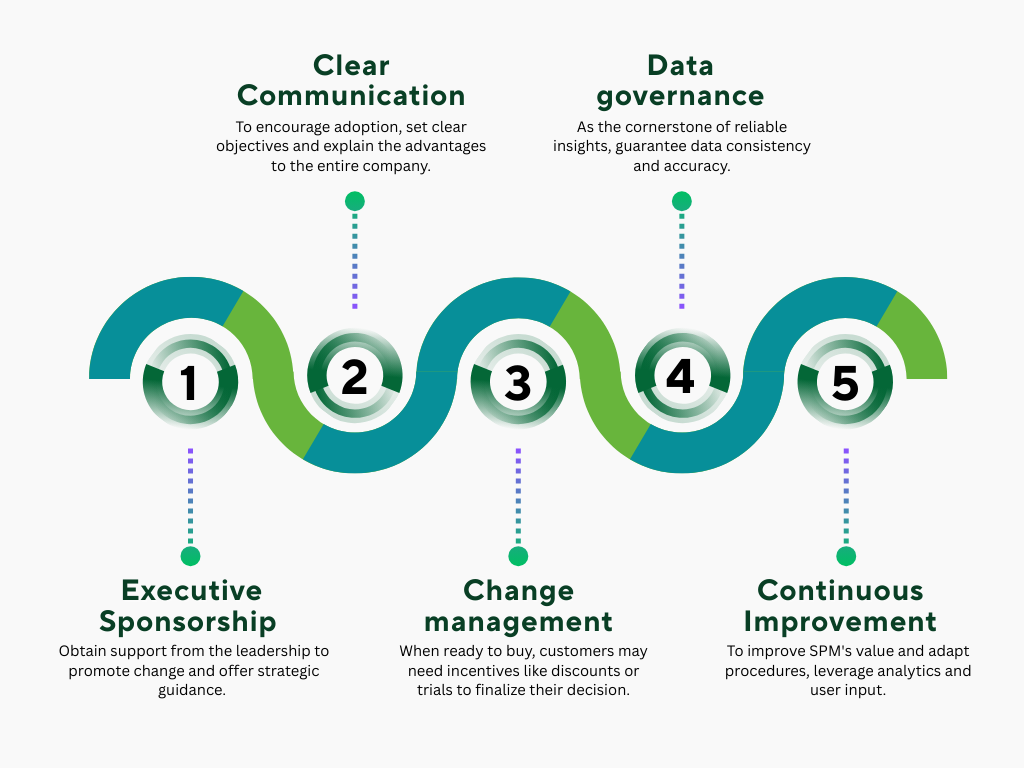
Best Practices for Successful ServiceNow SPM Implementation
- Executive Sponsorship: Obtain support from the leadership to promote change and offer strategic guidance.
- Clear Communication: To encourage adoption, set clear objectives and explain the advantages to the entire company.
- Change management: Involve stakeholders, offer training, and consistently collect feedback to address changes in culture and procedure.
- Data governance: As the cornerstone of reliable insights, guarantee data consistency and accuracy.
- Continuous Improvement: To improve SPM’s value and adapt procedures, leverage analytics and user input.
Conclusion
Strategic portfolio management is now an essential component of corporate agility, innovation, and
competitive differentiation, not just a back-office task. Organizations benefit from a strong platform
that unifies strategy and execution, encourages teamwork, and uses AI-driven insights to confidently
handle complexity with ServiceNow SPM. Purchasing a strong SPM solution, like as ServiceNow’s,
is essential to achieving long-term success as companies strive to prosper in unpredictable times.
Prepared By : Manish Gaikwad